Kept on this device only.
33 districts, the Hyderabad region and 158 towns and localities. A locality opens its district for now.
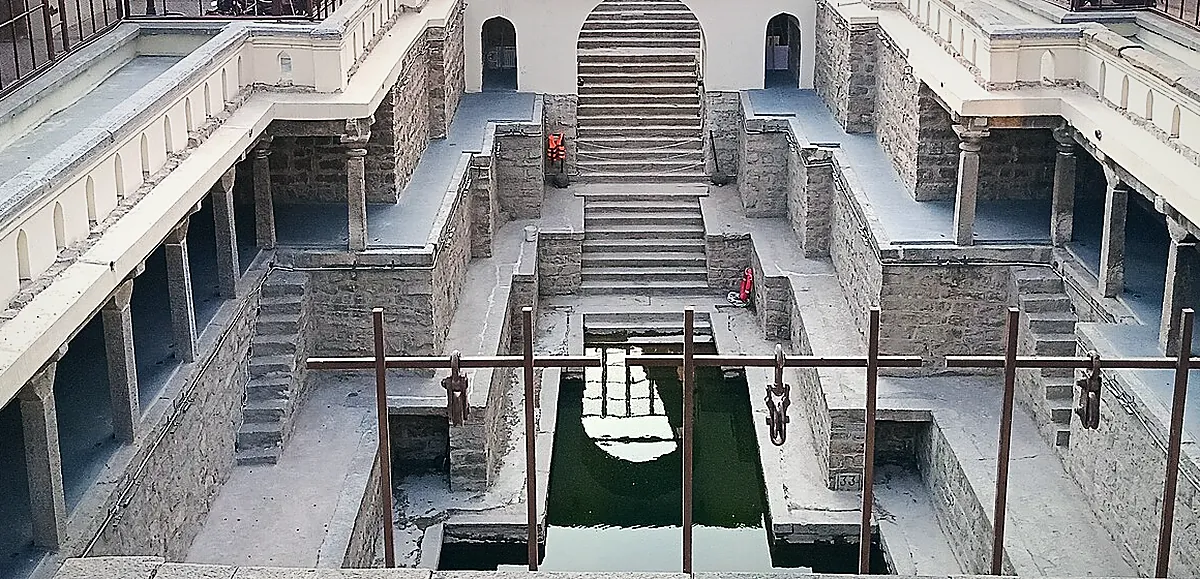
Each district is a stepwell, the koneru of our old towns. More steps showing, more stress. A pale, dry outline means no checked figure yet. Tap a well for its figures and its own page.
- T1Ground
- T2Space
- T3Research
- T4Citizens
- T5Press
- OrderOfficial order
Sources and departures for this view
- Schematic. Each stepwell stands at a district's approximate centre. The wells are a drawing, not real structures. No boundaries are drawn.
- Not to scale. The water line shows the level from 1 to 5, one step for each level, not litres or depth.
- Drawn to scale. Where the report gives a water-table depth, the district card shows it in metres on a 0 to 15 m scale.
- Heat layer. The glow repeats the district level around its centre, to show where stress clusters. It is not a measured surface.
- Globe. Land and sea only, from Natural Earth public-domain coastlines. The opening flight is sped up.
- Supply lines. In the Hyderabad region view, arcs run from four sources to the city. Their paths and thickness are schematic; the amounts drawn are being re-sourced from the water board.
- Without 3D. The same information is in the list of all districts.
The opening film in words (about one minute, no sound).
mandals declared drought-affected, order of 24 Oct 2026. Reported by UNI and The News Minute.
of the 365 drought-hit mandals are classed severe; 254 moderate. Same order.
of normal across the June to September monsoon, as reported with the drought order.
The state's October report is being read from the department's own copy.
Which outlets we use
Public bodies' own documents come first. Press is used only to relay them, and only from outlets with no ownership or editorial leadership by a party, a party leader or an elected representative. Figures from other outlets were removed on 15 Nov 2026 and are being read again from the original documents.
Book a tanker and reach the right office
Search your place at the top and this section will point to the channels for your area. Until then, both routes are shown.
Hyderabad water board (HMWSSB)
- Call 155313Customer care: book a drinking-water tanker or report a supply problem.
- Official websiteSign in with your connection number to book online and track the tanker.
- AndroidGoogle PlayiPhoneApp StoreThe board's own app books tankers and shows their status. The iPhone listing carries an individual developer's name; check it says HMWSSB before signing in.
- In personYour nearest water board section office can take a tanker request.
The board asks residents to book only through these channels, and has cautioned that some private tankers display its logo without permission. Channels as listed by the board on its website and reported on 27 Mar 2026 (NewsMeter).
Mission Bhagiratha and your local body
- Call 1916Toll-free helpline for rural drinking-water complaints, including dry taps and leaks.
- Gram panchayat portalThe panchayat secretary records the problem and can ask the mandal office for tanker supply.
- Municipal portalIn a town, the municipal office handles water supply and tanker requests; pick your town on the state portal.
- CollectorateIf the local office cannot help, the district Collectorate's control room and weekly grievance day are the next step.
Helpline as stated by All India Radio News on 22 Mar 2026 (newsonair.gov.in). District-by-district office numbers are not listed yet; they will be added only after each is checked on the district's official website.
Before you call
- Keep your connection or consumer number ready, and the exact address with a landmark.
- Note the date and time of the request and any reference number you are given.
- Store tanker water covered, and boil or filter it before drinking if you are unsure of the source.
- Phone numbers and services can change. If a number does not connect, check the official website of the office concerned.
Where Hyderabad's water comes from
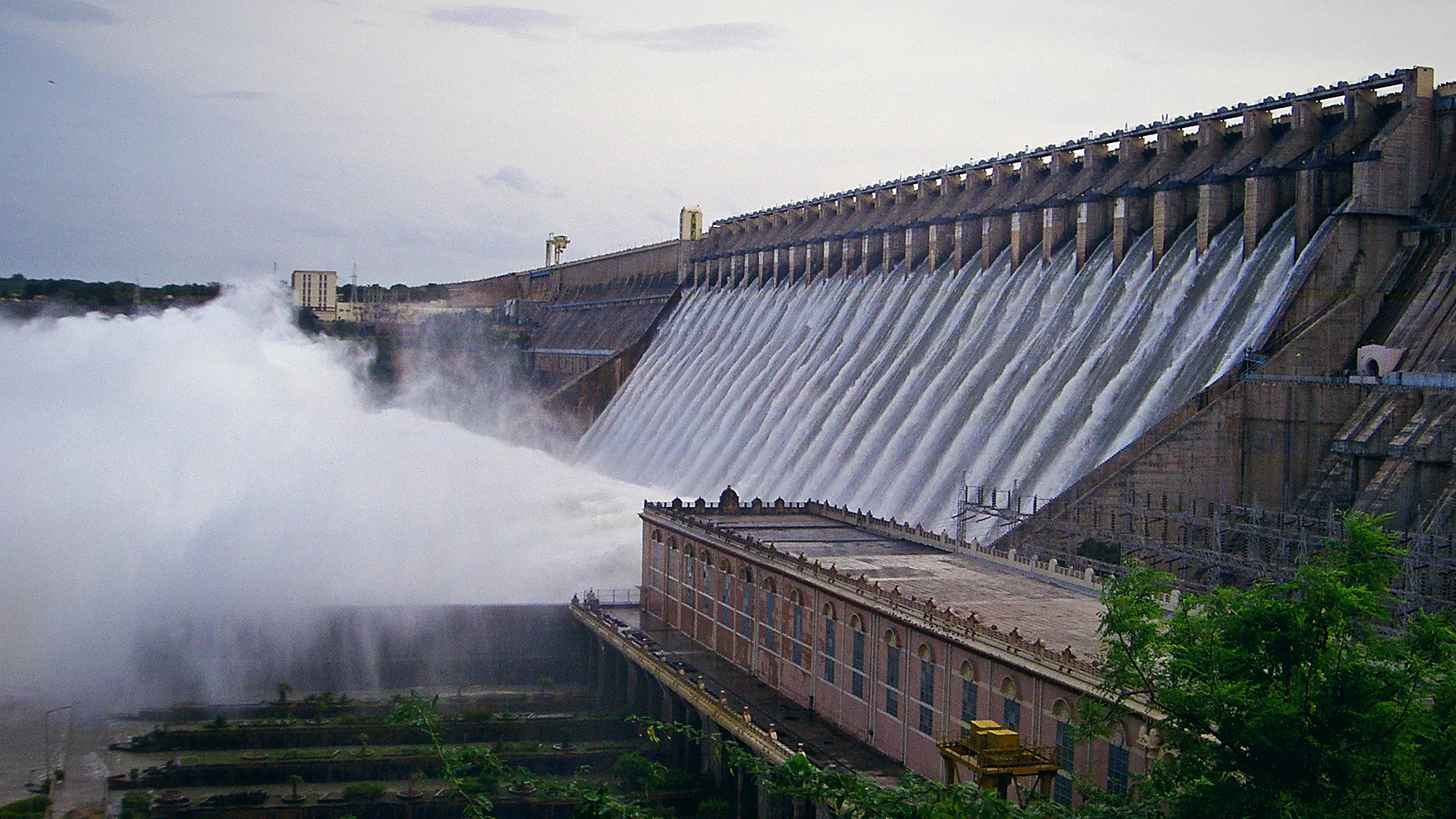
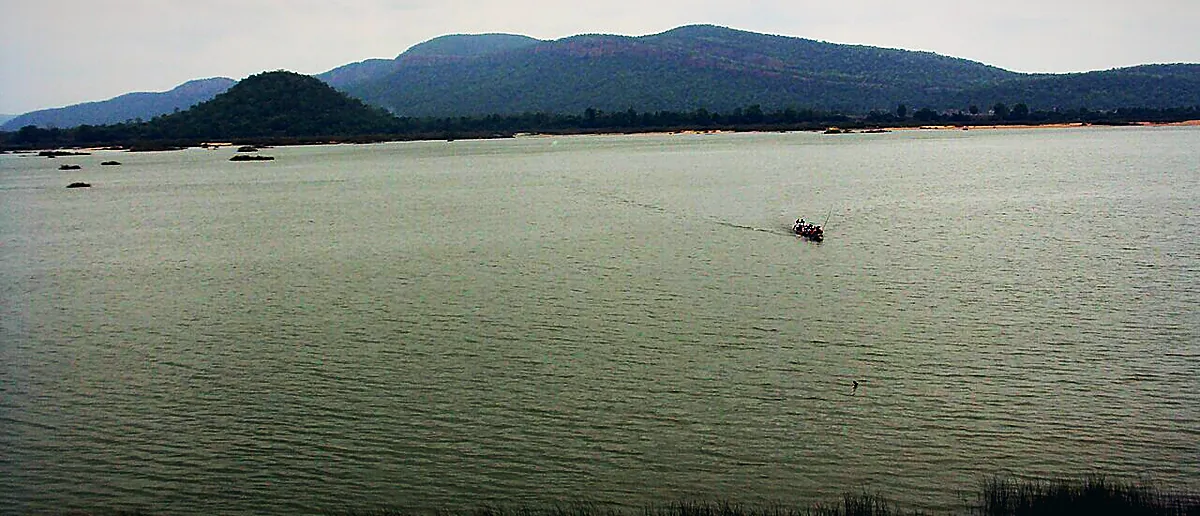
Hyderabad drinks river water pumped from far away: mainly the Krishna and the Godavari, with the Manjeera, Singur and the twin reservoirs at Osman Sagar and Himayat Sagar.
The rest of the state
Outside the city, tap water reaches towns and villages through Mission Bhagiratha and the local body. District supply figures are not published district by district; until they are, this page will not estimate them.
The year ahead, as it stands today
Show the three areas
At the tap
Supply days may thin out and tanker waits may grow, most where borewells have already dropped. To be confirmed from the water board's own notices.
In the borewell
Water tables have fallen across much of the state this year; district figures return as they are re-read from the state's own report. Deeper water means higher pumping cost and more dry wells before the next rains.
In the budget and the body
Tanker costs, food prices after a weak crop, and a hot March to May. Stored water left open breeds mosquitoes, so shortage does not mean less dengue.
El Niño loads the dice this year. Long-term warming and how water is managed locally matter as much. Whether the 2027 monsoon is good cannot be forecast yet.
Six steps that put water back
On the map, more steps showing means less water. Here it runs the other way: every step you take raises the well. Mark the ones you will do.
0 of 6Start anywhere.
The full twelve-month plan, and help for renters, associations and farmers
- Fix leaks and running cisterns; reuse RO reject water for mopping and plants.
- Start a borewell log: depth to water and pumping hours, once a month.
- Build or repair rooftop rainwater harvesting and recharge pits now, while it is dry and labour is free.
- Cover every storage drum.
- Register for tankers with the water board early; share bookings within the building.
- Farmers: follow the university and weather-office advisory before choosing a second crop where wells are falling.
- Agree a daily water budget per flat and stick to it together.
- Do not race to drill deeper; one deeper well dries the neighbours'.
- Follow official heat alerts; avoid outdoor work from noon to 4 pm; drink before you are thirsty.
- Check on elderly neighbours; know the signs of heat stroke and call 108.
- Cool-roof paint on top floors and tin roofs.
- Report tanker overcharging and leaks to the water board.
- Clean the roof before the first rain; let the first flush run off, then send the rest to the pit.
- Desilt recharge pits and keep lake and tank inlets clear.
- Stay flood-ready too: a drought year can still bring a violent downpour.
- Log the borewell after each good spell to see the pit working.
- Compare your borewell log with a year ago.
- Share the building's numbers with neighbours and the site.
- Repair what failed; plan the next dry season with what you learned.
If you rent
You can still cut use, cover storage, log the well with your neighbours and ask the owner in writing for harvesting repairs.
If you run an apartment association
Meter the borewell, publish monthly use, plan tankers together, fix the harvesting system and adopt the nearest lake inlet.
If you farm
Ask about drought input subsidy and contingency crops at the mandal agriculture office; keep fodder and water for animals in the plan.
What actually refills an aquifer
Show what works
Pump less
The fastest gain. Every litre not pumped stays in the ground. Metering and a shared budget make it visible.
Send rain down, not away
Rooftop harvesting and recharge pits work street by street. One pit will not refill an aquifer; a colony of them changes its borewells.
Protect lakes and tanks
They are the big recharge structures. Clear inlets, stop dumping, and help keep them at their full-tank level.
An honest limit: recharge needs rain. These steps decide how much of the 2027 monsoon stays underground; they cannot make water in a dry spring.
The official response so far
Jal Signal reports figures published by public bodies and explains them. It takes no side, names no person or party, and offers no opinion on policy.
Show actions and useful questions
Reported actions (to be checked against the orders)
- 365 mandals in 31 districts declared drought-affected on 24 Oct 2026.
- Relief directions: drinking water, fodder, rural work, loan rescheduling.
- Central disaster funds requested.
- Hyderabad's water board ordered 500 more tankers and emergency pumps for summer 2027.
- A study of groundwater conservation in other states announced.
Useful things to find out from your local office
- When will our mandal's relief list and payment dates be published?
- What is the city's summer water plan, and at what reservoir level does each step begin?
- Where are the ward cooling centres for the heat season?
- Where are reservoir and groundwater figures published?
- Which office helps with rainwater harvesting in our ward?
The site drafts a polite request to the right office, in Telugu, Urdu, Hindi and English. Nothing you type is stored.
Who does what, level by level
Telangana has about 12,700 gram panchayats, and sarpanches were elected in December 2025. Each step of the ladder has a job in a dry year. The site shows your own ladder for your address, with the office to write to at each step. Roles below are a draft to be checked against current government orders.
Show all six levels
Household and street
Use less, cover storage, log the borewell, harvest the roof, report leaks and dry taps.
Gram panchayat · ward member, sarpanch, panchayat secretary, gram sabha
Keeps the village water register, calls the gram sabha, plans works, reports shortage upward early. In towns: the ward corporator and the municipality or corporation.
Mandal · development officer, tahsildar, agriculture officer, water engineers
Sanctions and supervises works, verifies crop loss, arranges tankers and fodder, sends the mandal's figures to the district.
District · Collector and district officers
Runs relief, publishes beneficiary lists, releases funds, holds the weekly grievance day, leads the district disaster authority.
State departments · revenue and disaster management, panchayat raj, irrigation, groundwater, agriculture, water board
Declare drought, set relief rules, decide reservoir releases, publish the data, fund the districts.
Chief Minister and Cabinet, with the Assembly
Set the policy and the budget, ask the Centre for disaster funds, and lead the overall response. Your MLA and MP represent your area there.
What a gram panchayat can do this year
- Hold a gram sabha on water before January; agree a village water budget.
- List every borewell, hand pump, tank and well, with depth and whether it is working.
- Protect drinking-water sources first; no new commercial borewell near them.
- Desilt the tank and clear its feeder channels before June, using rural employment works.
- Put a soak pit beside every hand pump and harvesting on the school and panchayat roofs.
- Plan fodder and cattle water for March to May.
- Tell the mandal office the week a source runs dry, in writing, and share the reply on the notice board.
- Record the well levels every month and share them.
Legal powers and scheme rules for each step will be checked and cited before this goes public.
What the site will hold for every panchayat
- Its place on the ladder: mandal, district, constituency, offices to write to.
- Its mandal's rain, groundwater and drought status, with tier, source and date.
- Village-level figures where an open official source exists, for example tap connections and tank works.
- Reports from residents, shown as tier 4.
Honest limit: most water figures are published per mandal, not per panchayat. A panchayat page will say which numbers are its own and which are its mandal's.
How a figure earns its place, and its score
Every figure shows two things: the tier of its source and a trust score. Measured facts outrank every opinion, including ours.
Five steps, from the ground up
- T1Measured on the ground by a public bodyRain gauges, observation wells, reservoirs and supply. Can set a level.
- T2Seen from space or open scientific dataSatellite rain, soil moisture, lake spread. Sets a level only with tier 1.
- T3Studied and reviewedPeer-reviewed papers and institutes. Explains causes; supports a level.
- T4Reported by citizens and civic groupsDated, located reports. Prompts a check; never sets a level alone.
- T5Said in publicPress and commentary. Context only; never sets a level.
Official ordersDeclarations and orders sit beside the tiers. Shown as stated; they never move a level.
How well it traces to its origin
- 80 to 100 Strong: an original document, read twice.
- 60 to 79 Good: an official figure, relayed and read twice.
- 40 to 59 Limited: relayed and not yet read twice, or in conflict.
- Below 40 Weak: shown for context only.
A worked example
Originals first, then a short list of independent outlets
A figure is read from the public body's own document whenever it can be. Press is used only to relay such a figure, and only from outlets with no ownership or editorial leadership by a political party, a party leader or an elected representative.
Approved today: The Hindu, The Indian Express, Hindustan Times, The Times of India, Deccan Herald, Business Standard, Mint, The News Minute, Down To Earth, The South First, NewsMeter, and the wire services PTI, UNI and Reuters.
Each outlet's record is measured: the share of its figures that an independent second reading found on the page as cited. That checks our reading, not the outlet's own accuracy, and it is reviewed every quarter.
The full scoring table, and what the score does not say
Points, check by check
| Check | What earns the points | Points |
|---|---|---|
| Who produced it | A public body's own measurement, or satellite and open scientific data | 30 |
| An official order or decision; reviewed research | 20 | |
| A citizen or civic-group report | 10 | |
| How we saw it | We read the public body's own page or document | 30 |
| We read a news report relaying it | 10 | |
| Second reading | An independent second reading found the same figure on the page | 20 |
| Dated | The period measured is stated | 5 |
| Recent | The period ends within 60 days of 15 Nov 2026 | 5 |
| Agreement | A second, independent origin gives the same figure | +10 |
| Another source gives a different figure for the same thing | −10 |
What the score does not say
- It measures how well a figure is sourced, not whether the measurement itself is right. A figure can pass every check and still be wrong, which is why a person reviews them too.
- The point values are our judgement. They are fixed, dated and applied to every figure in the same way; any change will be dated here.
- The score is never used on its own to set a level. The colours on the map are still provisional and were assigned by hand; the full rule for levels will be published here before any level is confirmed.
How it works, in five steps
- We read figures that public bodies have published: rain, groundwater, reservoirs, supply and official orders.
- Every figure is read a second time, independently, against the page it came from.
- Each figure is shown with its source, its date and whether the original document was seen.
- A place's level compares today with that place's own past, and needs at least two independent sources.
- Where sources differ, both are shown. Where there is no checked figure, the map says so.
Rule of two: no level rests on a single source. Where sources disagree, both are shown.
All 33 districts
Show the list
| District | Level | What the report gives |
|---|
Water news for your area, in your inbox
Choose how often. Each email is written for the place you pick, so you read only what concerns your tap, your borewell and your street.
- Your district's level and what changed since the last email.
- Rain, groundwater and reservoir figures, each with its source and trust score.
- Supply notices and works announced for your area by the authority concerned.
- What helps now, for a home, an apartment block or a farm.
- Who to contact for your area, and how.
Please read before relying on this page
- Information only. This is an independent public-information project. The district map, levels, sources and household guidance are free to read. It is not an official source, not a warning or emergency service, and not professional advice of any kind.
- No affiliation. It is not connected with, funded by or endorsed by any government body, public authority, political party, company or organisation.
- Sources and accuracy. Every figure comes from published public sources, which are named with their dates. Figures can be incomplete, delayed or later revised, and mistakes are possible. Where sources differ, both are shown. For any decision, please rely on the notifications of the authority concerned.
- Levels and maps. Levels, colours, maps and graphics are simplified illustrations of published data. Maps are schematic, not to scale, and do not show legal or administrative boundaries.
- No criticism intended. Nothing here is meant to criticise, blame or rank any person, office, institution or community. The page describes published figures in a neutral way and supports the efforts of public bodies and citizens alike.
- Your privacy. The page has no advertising and no visitor tracking. Your place, steps and recent pages are kept only in your own browser, and the “You” button lets you see or clear them at any time.
- Corrections. If something is wrong or out of date, please write and it will be reviewed and corrected promptly. Contact: a dedicated project email will be shown here before the site goes public.